
Cruise Ship RTLS: GDPR-Compliant Local Tracking
Passenger Safety, Automated Muster Drills and Onboard Service
BLE cruise ship tracking delivers reliable, real-time indoor localization for passengers and crew members where satellite GPS cannot reach. From automated child safety alerts and muster station tracking to contactless cabin access and crowd management, Safectory’s rugged BLE infrastructure enhances guest comfort and shipboard operational safety.

Products used in this solution


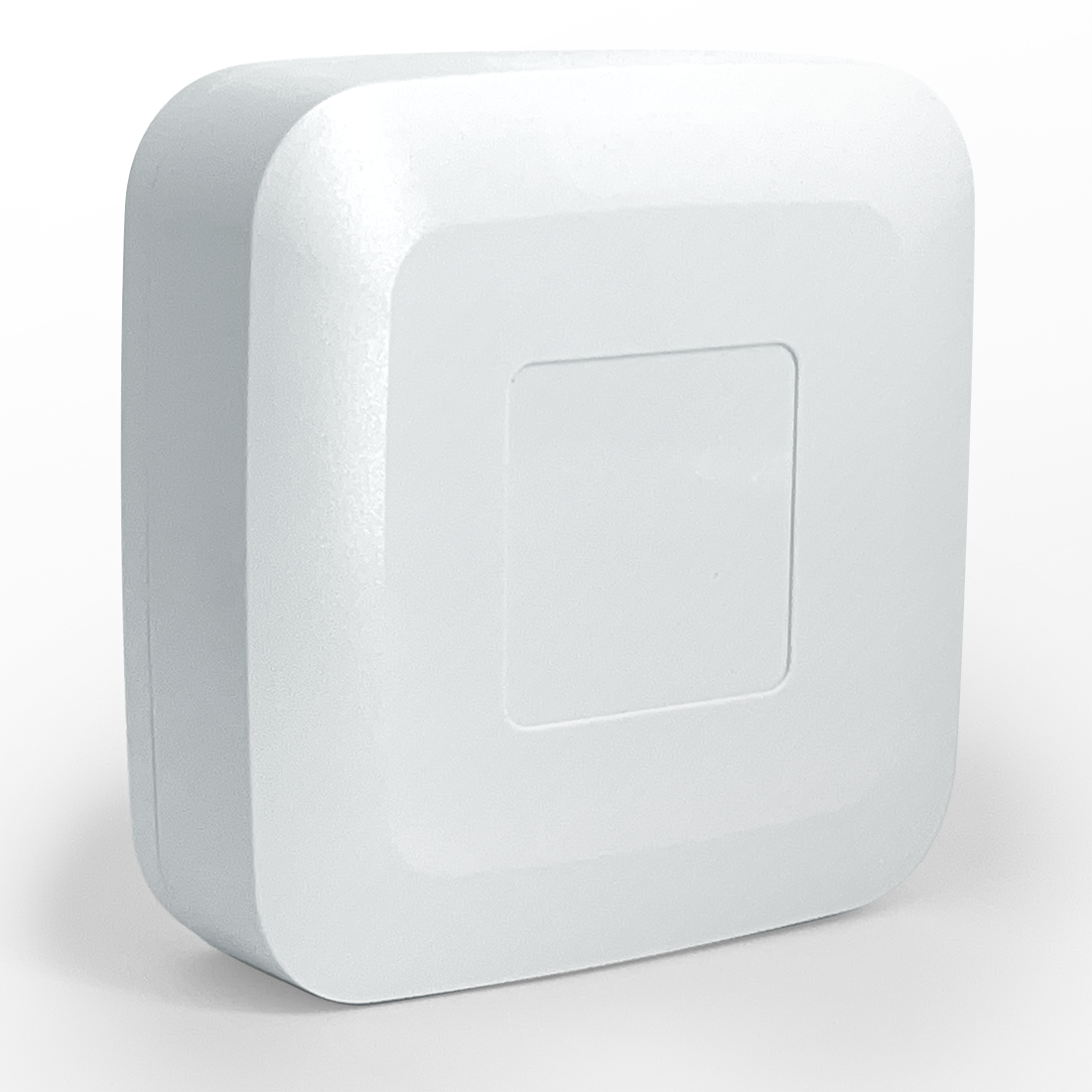
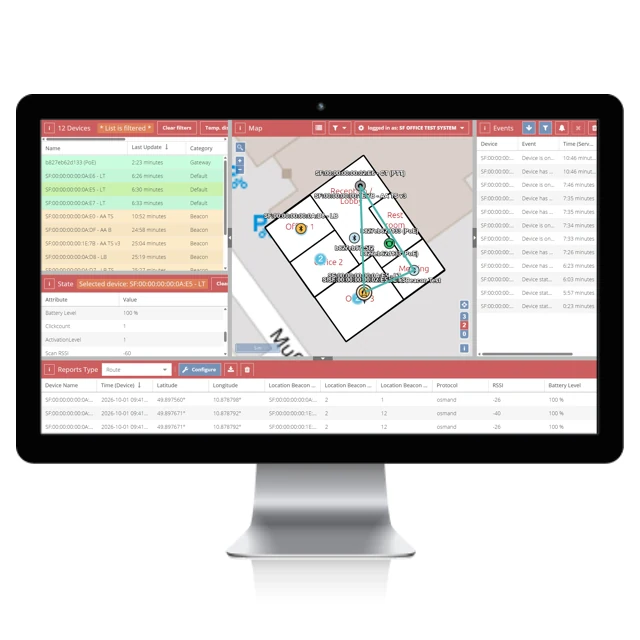
- On premise or via cloud
- Device and data management
- Open data and REST/websocket API
Automated Passenger Assembly and Emergency Muster Drills
Mandatory safety drills are traditionally labor-intensive. With Safectory BLE wristbands and cards, guests are detected contact-free upon entering their designated muster station. Bridge officers track live headcounts and pinpoint missing passengers immediately across ship decks.
Traffic Heatmaps and Bottleneck Prevention
Anonymized zone monitoring prevents crowding at dining halls, theaters, and disembarkation corridors. Real-time metrics allow proactive crew deployment and enable digital guest services like family locator features in the ship app.
Operational Speed and Strict Privacy Compliance
Drill completion times drop by up to 70%, facilitating punctual vessel departures. All localization data remains strictly on-premise within the ship’s local network.
FAQ – Frequently Asked Questions
BLE asset tracking simple, secure and scalable
Easily track assets in hospitals, factories and secure facilities, integrating with existing infrastructure.
When selecting an industrial location tracking system, B2B companies often compare BLE vs. RFID asset tracking. While both technologies track equipment, carrier assets, and tools, they differ fundamentally in operational mode, range, and infrastructure complexity.
How Does RFID Work in Asset Tracking?
Passive RFID tags (Radio-Frequency Identification) carry no internal battery. They remain dormant until energized by an RFID reader’s electromagnetic field. RFID is ideal for chokepoint detection, such as receiving gates, shipping docks, or designated transfer stations where assets must be logged at specific checkpoints.
How Does BLE (Bluetooth Low Energy) Work?
BLE beacons actively broadcast radio signals at regular intervals. Fixed anchor points or existing Wi-Fi access points (such as Aruba Wi-Fi 6 APs) receive these signals and calculate real-time positions. This enables facility-wide continuous tracking across large factory halls, warehouses, and outdoor yards with ranges up to 100 meters – without manual scans.
BLE vs. RFID Feature Comparison
- Tracking Mode: BLE provides continuous real-time indoor positioning. RFID provides discrete timestamped checkpoint scans.
- Coverage & Range: BLE covers up to 100 meters per access point. Passive RFID ranges from a few centimeters to 5–8 meters.
- Infrastructure Setup: Safectory BLE leverages pre-existing network access points (Zero-Calibration). RFID requires installing dedicated gate frames, readers, and antennas.
- Search Time & ROI: BLE eliminates search time for misplaced tools or container assets via live map visualization. RFID only indicates the last gate an asset passed.
- Hybrid Deployment: Modern smart factories frequently combine both: RFID for automated gate receiving and BLE for floor tracking.
When is BLE Better Than RFID?
When you need to track mobile assets continuously in dynamic environments (e.g., containers, pallets, or mobile equipment) without human intervention, BLE is the superior technology. Technical specifications can be reviewed in the official Bluetooth SIG Documentation.
When selecting a Real-Time Location System (RTLS), decision-makers frequently analyze BLE vs. UWB positioning. While Bluetooth Low Energy (BLE) focuses on cost efficiency and leveraging existing Wi-Fi hardware, Ultra-Wideband (UWB) delivers sub-meter precision.
How Does UWB Differ From BLE?
Ultra-Wideband utilizes wide radio frequency spectrums to measure signal Time of Flight (ToF), achieving positioning accuracy of under 10–30 centimeters. However, UWB requires specialized, high-cost anchor hardware and consumes significantly more battery power on tracking tags.
How Does BLE Compare?
Modern BLE 5.1/5.2 with Angle of Arrival (AoA) delivers accuracy under 1 to 2 meters – perfectly suited for 95% of industrial B2B use cases, including container tracking, tool localization, and pallet management. BLE stands out with 60–70% lower hardware costs, tag battery life up to 10 years, and compatibility with Aruba access points.
BLE vs. UWB Decision Guide
- Precision: UWB for sub-meter autonomous guided vehicle (AGV) control (< 30 cm); BLE for room, zone, and shelf-level tracking (1–2 m).
- Infrastructure Cost: BLE utilizes existing access point infrastructure, drastically reducing deployment expense.
- Battery Life: BLE beacons last up to 10 years; UWB transponders require frequent recharging or battery replacement.
- Scalability: BLE easily scales across sprawling production facilities and outdoor yards. Review technical standards at IEEE Standards Association.
Before investing in an enterprise-wide RTLS rollout, engineering teams prefer evaluating performance in their own operational environment. The Asset Tracking Demo Kit provides a simple plug-and-play evaluation package.
What is Included in the Safectory Demo Kit?
- Pre-Configured BLE Beacons: Selection of industrial beacons ready to attach to sample assets.
- Mobile Gateway / Anchors: Pre-configured receivers for instant setup without touching corporate IT networks.
- Cloud Dashboard Access: Full access to the Safectory RTLS Dashboard featuring live map visualization and tracking analytics.
How Fast is Deployment?
Setup requires zero network integration or complex cabling (Zero-Calibration). Simply power on the hardware, attach beacons, and view live tracking data within 30 minutes.
Data privacy and works council compliance are essential prerequisites when introducing indoor location systems. Regarding RTLS GDPR data privacy, Safectory is engineered from the ground up on privacy-by-design principles.
How Does Safectory Protect Personal Data?
Safectory is specifically built for tracking physical assets, equipment, and goods, not individuals. All beacon IDs are anonymized and cannot be linked to individual employees without explicit administrative authorization.
GDPR & Works Council Standards
- Anonymized Tracking: Beacons are attached to tools, containers, or pallets. Personal employee data is never processed or stored.
- Role-Based Access Control: Strict permission structures ensure only authorized personnel can access asset location maps.
- Regulatory Alignment: Fully compliant with EU General Data Protection Regulation (GDPR) guidelines and national labor privacy laws.
Learn more
Looking for the best BLE-based RTLS that respects data privacy and doesn’t overload your IT stack?
Discover demos, use cases and technical details.
Technical Setup
Maritime RF Architecture for Steel Environments
Calibrated gateway networks overcome multi-path reflections inside heavy metal bulkheads and marine enclosures.
Bridge and PMS System Interoperability
Direct connection to leading marine PMS platforms and safety console displays.
Waterproof Wearable Tags
IP68-certified wearable tags are saltwater-resistant, comfortable to wear, and provide sufficient battery life even for extended voyages.


Further Solutions

Optical and Wireless Visitor Counting
Zone and Occupancy Analysis
Path and Dwell-Time Analytics