
Healthcare RTLS: BLE-Based Asset Tracking for Hospitals
GDPR-Compliant Real-Time Location for Medical Devices and Clinical Staff
Hospital RTLS (Real-Time Locating System) enables automatic, real-time tracking of mobile medical devices such as infusion pumps, hospital beds, and wheelchairs. Clinical staff save up to 40 minutes of search time per shift, maintenance and calibration cycles are documented automatically, and cleaning statuses are visualized transparently—in full compliance with strict GDPR and patient privacy standards.
Products used in this solution
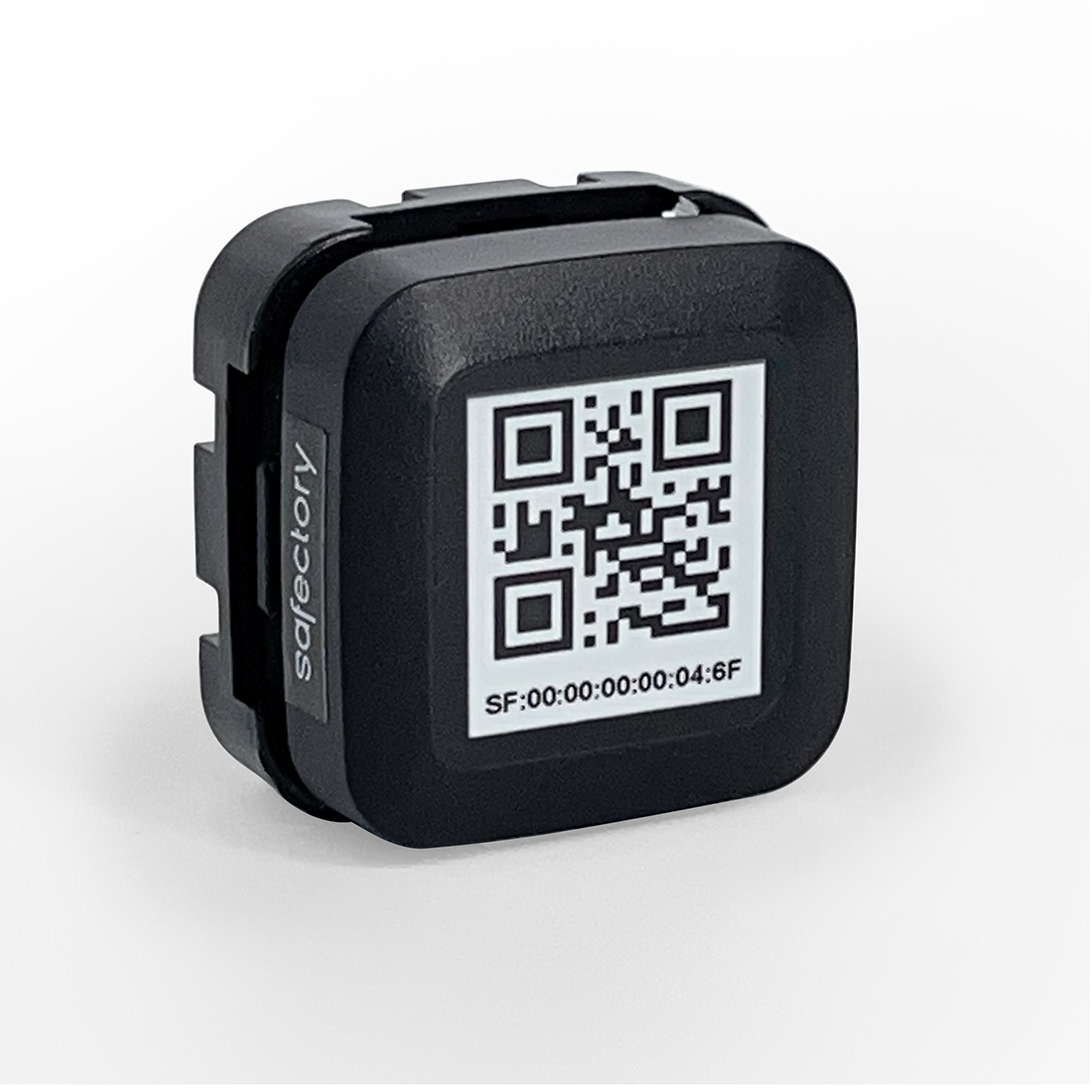

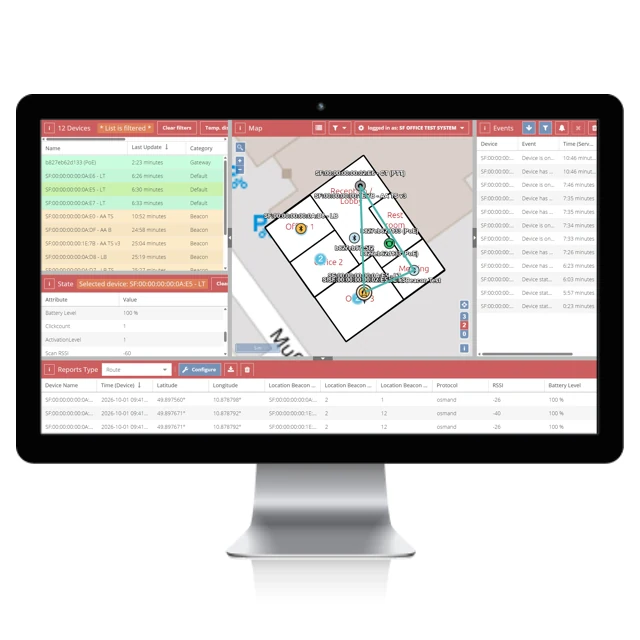
- On premise or via cloud
- Device and data management
- Open data and REST/websocket API
Maximize Nursing Relief with Digital Processes
In modern clinical environments, time lost searching for mobile equipment is a critical bottleneck. Implementing hospital asset tracking via Real-Time Locating Systems (RTLS) is the foundation for efficient workflows. Together with our partner Clinaris, we enable the full digitalization of hospital processes, particularly regarding bed management and medical device tracking. By combining smart BLE-native infrastructure with specialized HPM software modules, we create an end-to-end solution that ensures transparency, hygiene standards, and significant nurse relief.
Seamless Traceability for Patient Flow Optimization
Our joint Hospital Asset Management solution records the real-time location and status of beds, infusion pumps, monitors, and other medical equipment. Whether an asset is in use, cleaned, requiring maintenance, or ready for reuse, the digital twin provides immediate visibility. This eliminates manual search times, prevents bottlenecks in patient flow, and ensures all internal processes are reliably documented for regulatory compliance.
Supporting Healthcare Digitization Funding
Digitizing patient logistics and clinical workflows is a primary focus for modern healthcare funding initiatives. By deploying B2B Real-time Asset Visibility Systems, hospitals can achieve a rapid ROI through reduced asset loss and optimized maintenance cycles. We support your facility with the technical documentation required for funding applications and strategic digitization roadmaps.
FAQ – Frequently Asked Questions
BLE asset tracking simple, secure and scalable
Easily track assets in hospitals, factories and secure facilities, integrating with existing infrastructure.
Managing battery replacement across large-scale deployments with thousands of assets is a key operational consideration. Actual BLE beacon battery life depends on battery capacity, broadcast interval, and environmental conditions.
Typical Battery Lifespan Overview
- Standard Asset Beacons (CR2477 Coin Cell): 3 to 5 years at a standard 1–2 second broadcast ping rate.
- Industrial Long-Life Beacons (Li-SOCl2): Up to 8 to 10 years in continuous industrial operation.
- Smart Power-Saving Mode: Integrated motion sensors place beacons into sleep mode when assets are stationary, extending battery life by up to 40%.
Automated Battery Monitoring
The Safectory RTLS Dashboard automatically monitors voltage levels across all active tags. When capacity drops below a defined threshold (e.g., 15%), automated maintenance alerts are triggered. Read more about Bluetooth battery standards at the Bluetooth SIG Developer Portal.
When selecting an industrial location tracking system, B2B companies often compare BLE vs. RFID asset tracking. While both technologies track equipment, carrier assets, and tools, they differ fundamentally in operational mode, range, and infrastructure complexity.
How Does RFID Work in Asset Tracking?
Passive RFID tags (Radio-Frequency Identification) carry no internal battery. They remain dormant until energized by an RFID reader’s electromagnetic field. RFID is ideal for chokepoint detection, such as receiving gates, shipping docks, or designated transfer stations where assets must be logged at specific checkpoints.
How Does BLE (Bluetooth Low Energy) Work?
BLE beacons actively broadcast radio signals at regular intervals. Fixed anchor points or existing Wi-Fi access points (such as Aruba Wi-Fi 6 APs) receive these signals and calculate real-time positions. This enables facility-wide continuous tracking across large factory halls, warehouses, and outdoor yards with ranges up to 100 meters – without manual scans.
BLE vs. RFID Feature Comparison
- Tracking Mode: BLE provides continuous real-time indoor positioning. RFID provides discrete timestamped checkpoint scans.
- Coverage & Range: BLE covers up to 100 meters per access point. Passive RFID ranges from a few centimeters to 5–8 meters.
- Infrastructure Setup: Safectory BLE leverages pre-existing network access points (Zero-Calibration). RFID requires installing dedicated gate frames, readers, and antennas.
- Search Time & ROI: BLE eliminates search time for misplaced tools or container assets via live map visualization. RFID only indicates the last gate an asset passed.
- Hybrid Deployment: Modern smart factories frequently combine both: RFID for automated gate receiving and BLE for floor tracking.
When is BLE Better Than RFID?
When you need to track mobile assets continuously in dynamic environments (e.g., containers, pallets, or mobile equipment) without human intervention, BLE is the superior technology. Technical specifications can be reviewed in the official Bluetooth SIG Documentation.
When selecting a Real-Time Location System (RTLS), decision-makers frequently analyze BLE vs. UWB positioning. While Bluetooth Low Energy (BLE) focuses on cost efficiency and leveraging existing Wi-Fi hardware, Ultra-Wideband (UWB) delivers sub-meter precision.
How Does UWB Differ From BLE?
Ultra-Wideband utilizes wide radio frequency spectrums to measure signal Time of Flight (ToF), achieving positioning accuracy of under 10–30 centimeters. However, UWB requires specialized, high-cost anchor hardware and consumes significantly more battery power on tracking tags.
How Does BLE Compare?
Modern BLE 5.1/5.2 with Angle of Arrival (AoA) delivers accuracy under 1 to 2 meters – perfectly suited for 95% of industrial B2B use cases, including container tracking, tool localization, and pallet management. BLE stands out with 60–70% lower hardware costs, tag battery life up to 10 years, and compatibility with Aruba access points.
BLE vs. UWB Decision Guide
- Precision: UWB for sub-meter autonomous guided vehicle (AGV) control (< 30 cm); BLE for room, zone, and shelf-level tracking (1–2 m).
- Infrastructure Cost: BLE utilizes existing access point infrastructure, drastically reducing deployment expense.
- Battery Life: BLE beacons last up to 10 years; UWB transponders require frequent recharging or battery replacement.
- Scalability: BLE easily scales across sprawling production facilities and outdoor yards. Review technical standards at IEEE Standards Association.
Before investing in an enterprise-wide RTLS rollout, engineering teams prefer evaluating performance in their own operational environment. The Asset Tracking Demo Kit provides a simple plug-and-play evaluation package.
What is Included in the Safectory Demo Kit?
- Pre-Configured BLE Beacons: Selection of industrial beacons ready to attach to sample assets.
- Mobile Gateway / Anchors: Pre-configured receivers for instant setup without touching corporate IT networks.
- Cloud Dashboard Access: Full access to the Safectory RTLS Dashboard featuring live map visualization and tracking analytics.
How Fast is Deployment?
Setup requires zero network integration or complex cabling (Zero-Calibration). Simply power on the hardware, attach beacons, and view live tracking data within 30 minutes.
Learn more
Looking for the best BLE-based RTLS that respects data privacy and doesn’t overload your IT stack?
Discover demos, use cases and technical details.
Technical Setup
Why Safectory? Zero-Calibration and Data Sovereignty
Compared to complex UWB systems or proprietary RFID setups from industry giants, Safectory offers a Zero-Calibration solution based on open Bluetooth (BLE) standards. Installation occurs during ongoing operations without the need for extensive calibration runs. Furthermore, all sensitive medical data remains on-premise, simplifying compliance with healthcare data protection officers.
Industrial-Grade Hardware for Clinical Use
Our hardware is optimized for clinical demands (resistance to disinfectants, IP rating):
• Compact Asset Tags: Ideal for small medical devices like infusion pumps.
• Nurse Safety Badges: Integrated buttons for lone worker protection and emergency alerts.
• Hospital Bed Tracking: Robust tags with multi-year battery life designed for permanent logistics use.
Further insights: Read our analysis on how real-time location systems reduce operating costs.

Safectory and Clinaris: A Digital Health Partnership
“Our software helps to save lives in hospitals and care homes. We are proud of that.”
“Our HPM® software helps save lives in hospitals and care homes by closing hygiene gaps. We are proud of that.” – Clinaris represents innovation in the digital health market. The technological foundation is the on-premise BLE infrastructure provided by Safectory. Unlike cloud-centric US systems, we prioritize maximum data sovereignty (GDPR by Design) and Made in Germany engineering.
Integrating location data into the HPM® platform allows nursing staff to view the status of Hilfsmittel directly on their mobile devices. This not only reduces frustration but also enables proactive maintenance management. The solution is fully scalable, from specialized clinics to large university hospitals, ensuring future-proof integration into existing clinical IT environments.


Further Solutions

Optical and Wireless Visitor Counting
Zone and Occupancy Analysis
Path and Dwell-Time Analytics