
FlowTrack – Footfall and Visitor Flow Analytics
Real-Time People Counting, Zone Tracking and Occupancy Analysis
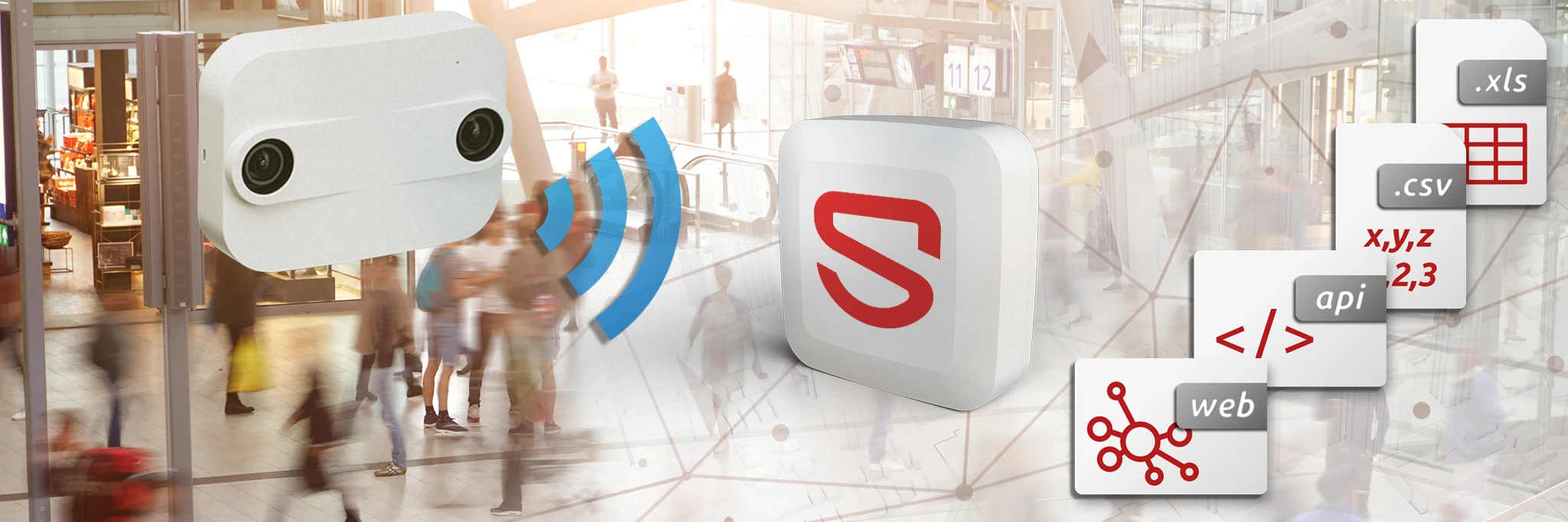
FlowTrack combines high-precision stereo vision sensors, automatic number plate recognition (ANPR), and passive radio frequency tracking into a unified analytics platform. From smart cities and transit hubs to retail malls and large-scale venues, FlowTrack delivers actionable metrics for capacity planning, pedestrian frequencies, and conversion rates – 100% GDPR-compliant.
Products used in this solution
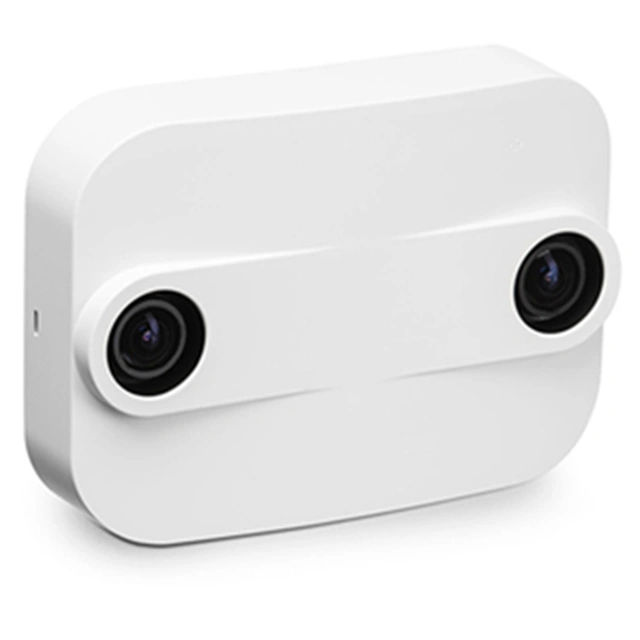
- 3D Stereo Vision Sensor
- > 98 % Counting Accuracy
- Zone and Occupancy Analysis
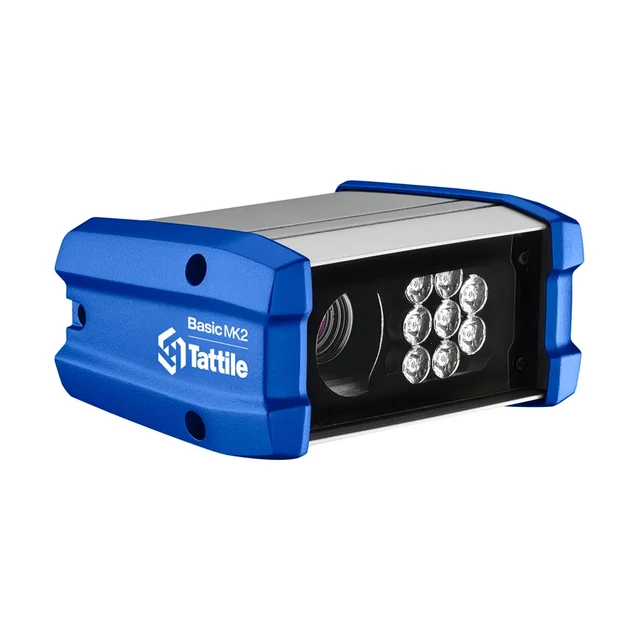
- On-Board AI Accelerator
- > 99 % Plate Detection
- IP67 Weatherproof and PoE+
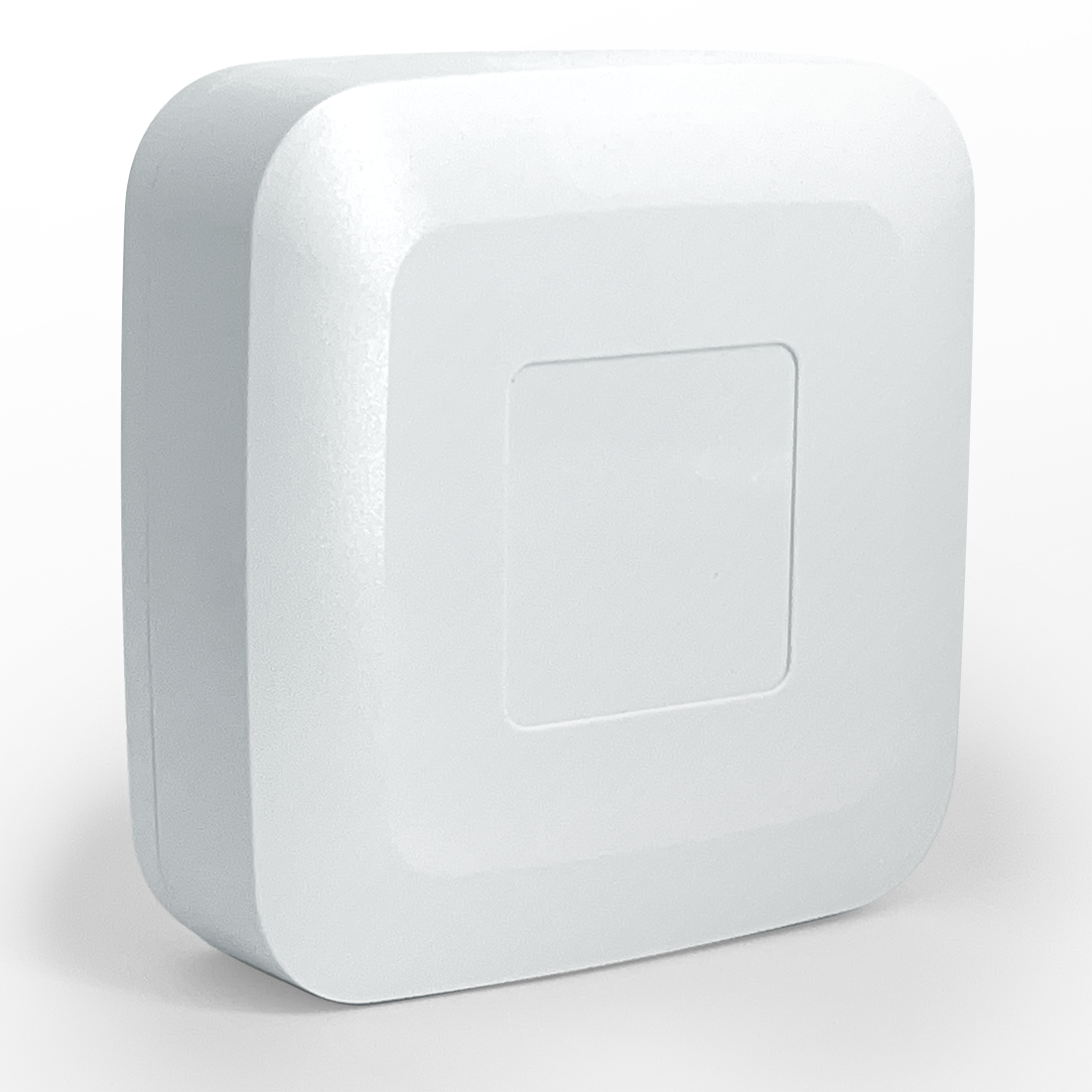
- Central Analytics Platform
- Live Dashboards and Reports
- GDPR-Compliant Processing
High-Precision People Counting with Stereo Vision and ANPR
Accurate capture of visitor traffic demands uncompromising precision, even in crowded environments and challenging light conditions. FlowTrack relies on optical stereo vision sensors (such as the XOVIS PC2) at primary counting points and entry gates, recording bidirectional ingress and egress with over 98% accuracy in 10-minute intervals. At access perimeters and parking facilities, intelligent ANPR cameras (Tattile Basic MK2) automatically register vehicular inflow and regional origin demographics.
Zone Analysis, Dwell Times and Weather Correlation
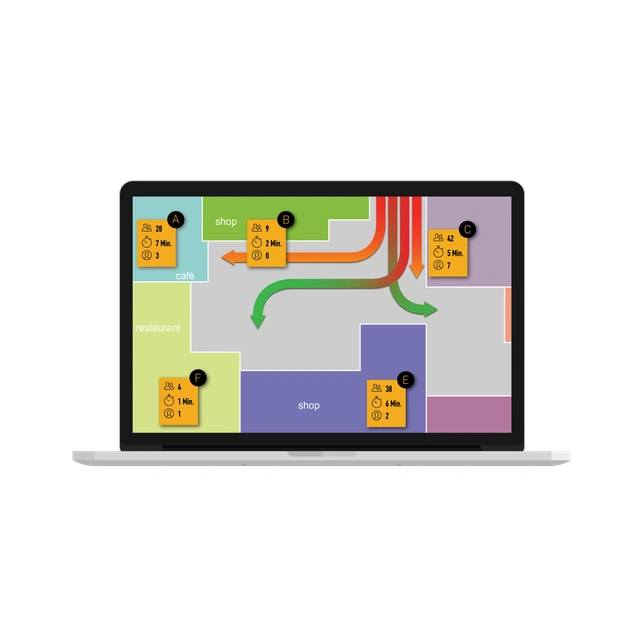
Beyond entrance tallies, FlowTrack determines real-time area occupancy (calculated as the live differential between entrances and exits). Utilizing passive RF and BLE signal detection through Safectory Gateways, the system maps pedestrian paths across sensor nodes (path segmentation) and measures average dwell times – cleanly filtered to exclude staff beacons. The integrated BMS Analytics Suite cross-correlates visitor numbers with weather data (temperature, sunshine hours, precipitation) to identify seasonal trends and forecast demand.
Operational Efficiency, Planning Security and ROI
FlowTrack turns raw footfall into solid decision-making foundations for mall operators, transit authorities, and municipal planners. Staff allocation, security concepts, and tenant lease valuations rest on reliable real-time figures rather than guesswork. Combining robust hardware with modular deployment options, FlowTrack implementations typically achieve full return on investment (ROI) within 9 months.
FAQ – Frequently Asked Questions
BLE asset tracking simple, secure and scalable
Easily track assets in hospitals, factories and secure facilities, integrating with existing infrastructure.
Many industrial manufacturers and critical infrastructure operators require complete data sovereignty within their local network. Safectory supports full RTLS on-premise deployment as well as secure cloud hosting.
Which Deployment Models Are Available?
- On-Premise Server: The complete Safectory positioning engine operates locally on your internal servers or virtual machines (VMware / Docker / Kubernetes). No location data ever leaves your corporate network.
- Private Cloud: Hosted in ISO 27001-certified German data centers (Frankfurt am Main).
- Hybrid Deployment: Local location processing at plant sites with centralized management at headquarters.
Benefits of On-Premise RTLS
On-premise execution guarantees maximum data sovereignty, zero LAN latency, and independence from external internet connections. Security standards align with guidelines from the Federal Office for Information Security (BSI).
A Real-Time Location System delivers maximum ROI when seamlessly connected with enterprise software. RTLS SAP ERP WMS integration enables location data to directly trigger automated business workflows.
Which APIs and Interfaces Does Safectory Provide?
Safectory features modern REST and real-time streaming interfaces:
- REST API: Standardized HTTP JSON endpoints to query asset coordinates, movement history, and zone status.
- Webhooks & MQTT: Real-time event push notifications upon zone transitions, movement events, or sensor telemetry updates.
- SAP & WMS Connectors: Direct mapping of Safectory beacon IDs to SAP material numbers or warehouse bin locations.
Enterprise Integration Benefits
Integration automates inventory booking, eliminates manual search times in SAP EWM, and delivers real-time asset utilization analytics. Explore developer documentation in the Safectory API Portal and OpenAPI specifications.
Managing battery replacement across large-scale deployments with thousands of assets is a key operational consideration. Actual BLE beacon battery life depends on battery capacity, broadcast interval, and environmental conditions.
Typical Battery Lifespan Overview
- Standard Asset Beacons (CR2477 Coin Cell): 3 to 5 years at a standard 1–2 second broadcast ping rate.
- Industrial Long-Life Beacons (Li-SOCl2): Up to 8 to 10 years in continuous industrial operation.
- Smart Power-Saving Mode: Integrated motion sensors place beacons into sleep mode when assets are stationary, extending battery life by up to 40%.
Automated Battery Monitoring
The Safectory RTLS Dashboard automatically monitors voltage levels across all active tags. When capacity drops below a defined threshold (e.g., 15%), automated maintenance alerts are triggered. Read more about Bluetooth battery standards at the Bluetooth SIG Developer Portal.
When selecting an industrial location tracking system, B2B companies often compare BLE vs. RFID asset tracking. While both technologies track equipment, carrier assets, and tools, they differ fundamentally in operational mode, range, and infrastructure complexity.
How Does RFID Work in Asset Tracking?
Passive RFID tags (Radio-Frequency Identification) carry no internal battery. They remain dormant until energized by an RFID reader’s electromagnetic field. RFID is ideal for chokepoint detection, such as receiving gates, shipping docks, or designated transfer stations where assets must be logged at specific checkpoints.
How Does BLE (Bluetooth Low Energy) Work?
BLE beacons actively broadcast radio signals at regular intervals. Fixed anchor points or existing Wi-Fi access points (such as Aruba Wi-Fi 6 APs) receive these signals and calculate real-time positions. This enables facility-wide continuous tracking across large factory halls, warehouses, and outdoor yards with ranges up to 100 meters – without manual scans.
BLE vs. RFID Feature Comparison
- Tracking Mode: BLE provides continuous real-time indoor positioning. RFID provides discrete timestamped checkpoint scans.
- Coverage & Range: BLE covers up to 100 meters per access point. Passive RFID ranges from a few centimeters to 5–8 meters.
- Infrastructure Setup: Safectory BLE leverages pre-existing network access points (Zero-Calibration). RFID requires installing dedicated gate frames, readers, and antennas.
- Search Time & ROI: BLE eliminates search time for misplaced tools or container assets via live map visualization. RFID only indicates the last gate an asset passed.
- Hybrid Deployment: Modern smart factories frequently combine both: RFID for automated gate receiving and BLE for floor tracking.
When is BLE Better Than RFID?
When you need to track mobile assets continuously in dynamic environments (e.g., containers, pallets, or mobile equipment) without human intervention, BLE is the superior technology. Technical specifications can be reviewed in the official Bluetooth SIG Documentation.
Learn more
Looking for the best BLE-based RTLS that respects data privacy and doesn’t overload your IT stack?
Discover demos, use cases and technical details.
Technical Setup
Sensor Fusion: Optics, Wireless and Edge Computing
FlowTrack harnesses intelligent sensor fusion: Optical overhead stereo sensors process movement trajectories directly on the device edge. Video streams are never saved or transmitted across the network, ensuring stringent privacy compliance. Simultaneously, Safectory Gateways monitor passive radio frequencies across multiple bands to correlate cross-zone dwell times and movement sequences.
BMS Analytics Suite and REST API Interfaces
All counting and tracking streams converge in the cloud or on-premise BMS Analytics Suite. Intuitive dashboards display daily totals, hourly occupancy curves, and return-visitor rates. For downstream integration into ERP, POS, or BI tools, FlowTrack offers automated CSV reports and real-time REST APIs.
Industrial Reliability for Indoor and Outdoor Use
Hardware components are engineered for heavy-duty 24/7 commercial operation. Tattile ANPR cameras provide IP67 weather sealing across harsh temperature ranges (-40 °C to +60 °C). Safectory Gateways support flexible Ethernet, Wi-Fi, or LTE connectivity with local failover memory buffers to protect data integrity during network interruptions.