
FlowTrack – Footfall & Visitor Flow Analytics
Real-Time People Counting, Zone Tracking & Occupancy Analysis
FlowTrack combines high-precision 3D stereo vision sensors, automatic number plate recognition (ANPR), and passive radio frequency tracking into a unified analytics platform. From smart cities and transit hubs to retail malls and large-scale venues, FlowTrack delivers actionable metrics for capacity planning, pedestrian frequencies, and conversion rates – 100% GDPR-compliant.
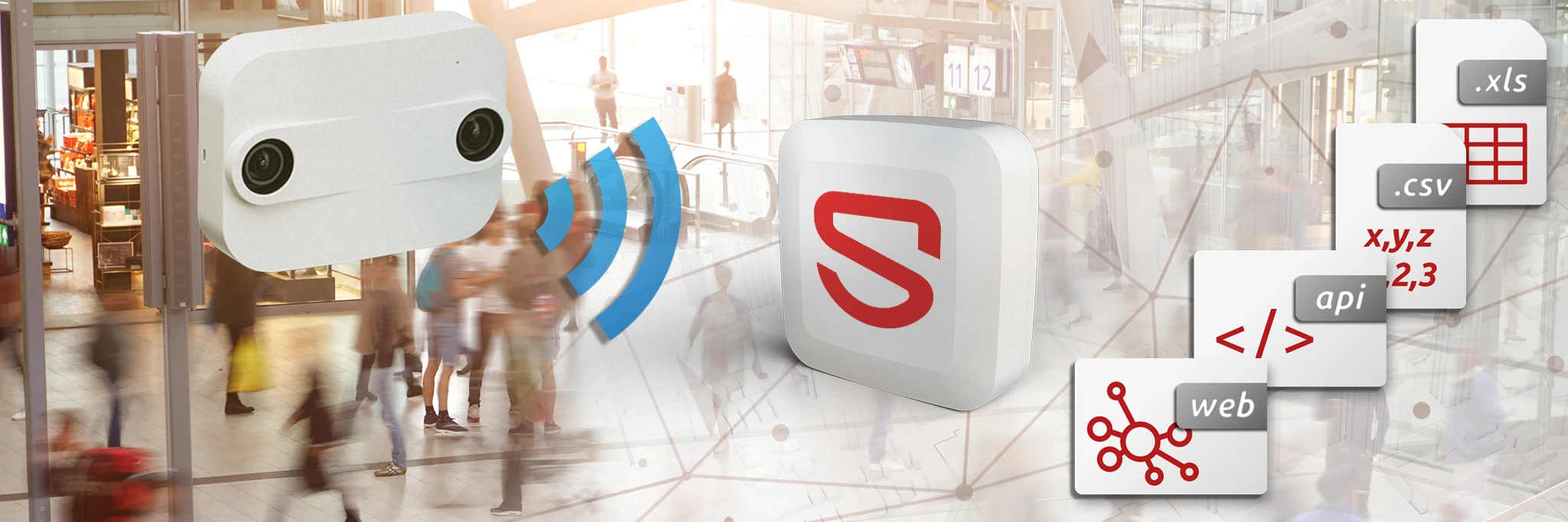
High-Precision People Counting with 3D Stereo Vision & ANPR
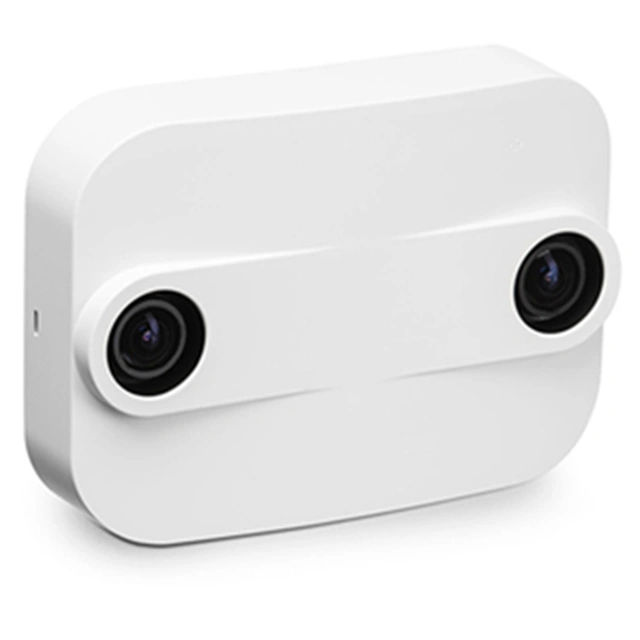
Accurate capture of visitor traffic demands uncompromising precision, even in crowded environments and challenging light conditions. FlowTrack relies on optical 3D stereo vision sensors (such as the XOVIS PC2) at primary counting points and entry gates, recording bidirectional ingress and egress with over 98% accuracy in 10-minute intervals. At access perimeters and parking facilities, intelligent ANPR cameras (Tattile Basic MK2) automatically register vehicular inflow and regional origin demographics.
Zone Analysis, Dwell Times & Weather Correlation
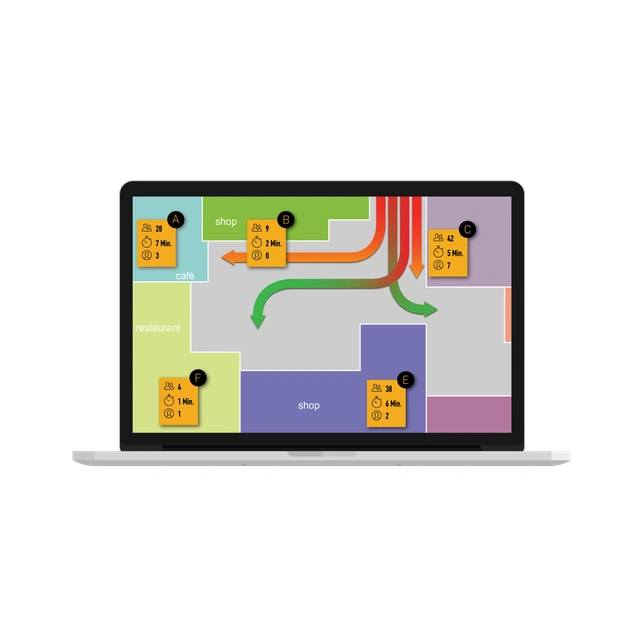
Beyond entrance tallies, FlowTrack determines real-time area occupancy (calculated as the live differential between entrances and exits). Utilizing passive RF and BLE signal detection through Safectory Gateways, the system maps pedestrian paths across sensor nodes (path segmentation) and measures average dwell times – cleanly filtered to exclude staff beacons. The integrated BMS Analytics Suite cross-correlates visitor numbers with weather data (temperature, sunshine hours, precipitation) to identify seasonal trends and forecast demand.
Operational Efficiency, Planning Security & ROI
FlowTrack turns raw footfall into solid decision-making foundations for mall operators, transit authorities, and municipal planners. Staff allocation, security concepts, and tenant lease valuations rest on reliable real-time figures rather than guesswork. Combining robust hardware with modular deployment options, FlowTrack implementations typically achieve full return on investment (ROI) within 9 months.
Products used in this solution
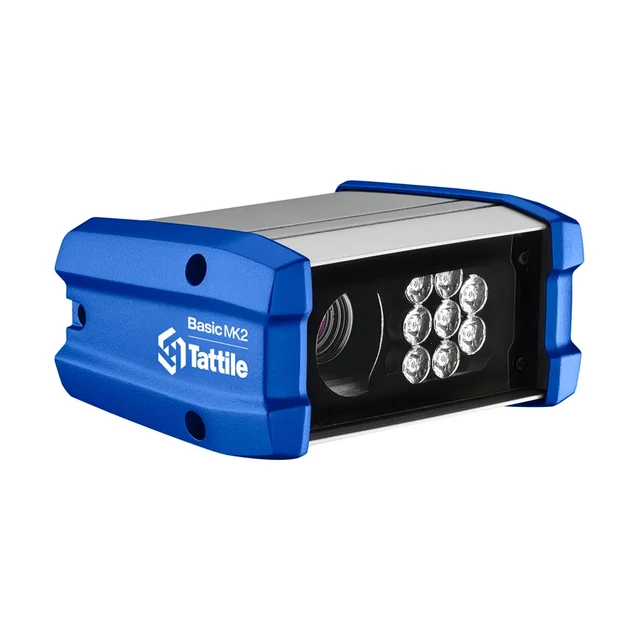
- On-Board AI Accelerator
- > 99 % Plate Detection
- IP67 Weatherproof & PoE+
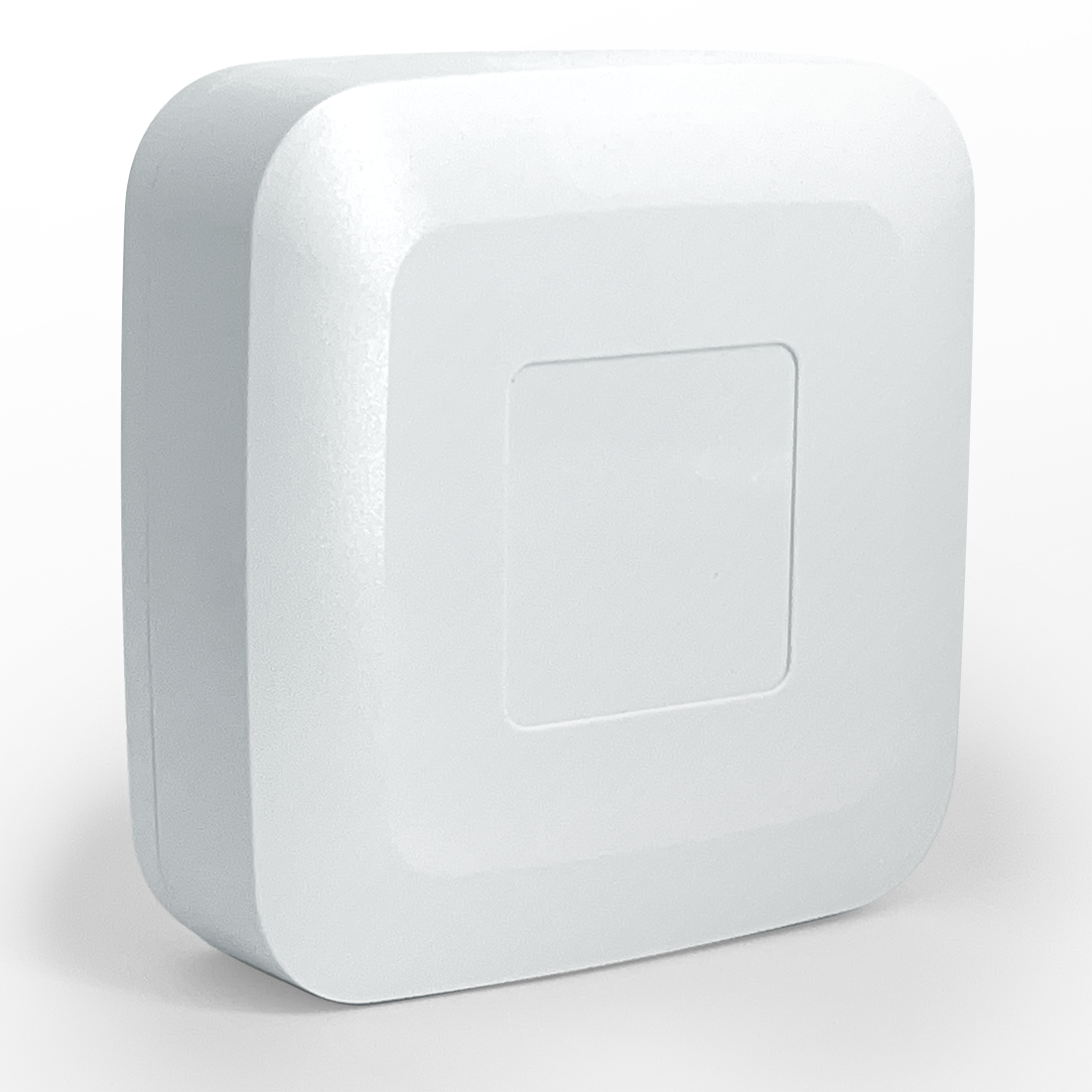
- Central Analytics Platform
- Live Dashboards & Reports
- GDPR-Compliant Processing
Technical Setup
Sensor Fusion: Optics, Wireless & Edge Computing
FlowTrack harnesses intelligent sensor fusion: Optical 3D stereo cameras process movement trajectories directly on the device edge. Video streams are never saved or transmitted across the network, ensuring stringent privacy compliance. Simultaneously, Safectory Gateways monitor passive radio frequencies across multiple bands to correlate cross-zone dwell times and movement sequences.
BMS Analytics Suite & REST API Interfaces
All counting and tracking streams converge in the cloud or on-premise BMS Analytics Suite. Intuitive dashboards display daily totals, hourly occupancy curves, and return-visitor rates. For downstream integration into ERP, POS, or BI tools, FlowTrack offers automated CSV reports and real-time REST APIs.
Industrial Reliability for Indoor & Outdoor Use
Hardware components are engineered for heavy-duty 24/7 commercial operation. Tattile ANPR cameras provide IP67 weather sealing across harsh temperature ranges (-40 °C to +60 °C). Safectory Gateways support flexible Ethernet, Wi-Fi, or LTE connectivity with local failover memory buffers to protect data integrity during network interruptions.


Further Solutions



FAQ – Frequently Asked Questions
BLE asset tracking simple, secure and scalable
Easily track assets in hospitals, factories and secure facilities, integrating with existing infrastructure.
Managing battery replacement across large-scale deployments with thousands of assets is a key operational consideration. Actual BLE beacon battery life depends on battery capacity, broadcast interval, and environmental conditions.
Typical Battery Lifespan Overview
- Standard Asset Beacons (CR2477 Coin Cell): 3 to 5 years at a standard 1–2 second broadcast ping rate.
- Industrial Long-Life Beacons (Li-SOCl2): Up to 8 to 10 years in continuous industrial operation.
- Smart Power-Saving Mode: Integrated motion sensors place beacons into sleep mode when assets are stationary, extending battery life by up to 40%.
Automated Battery Monitoring
The Safectory RTLS Dashboard automatically monitors voltage levels across all active tags. When capacity drops below a defined threshold (e.g., 15%), automated maintenance alerts are triggered. Read more about Bluetooth battery standards at the Bluetooth SIG Developer Portal.
When selecting an industrial location tracking system, B2B companies often compare BLE vs. RFID asset tracking. While both technologies track equipment, carrier assets, and tools, they differ fundamentally in operational mode, range, and infrastructure complexity.
How Does RFID Work in Asset Tracking?
Passive RFID tags (Radio-Frequency Identification) carry no internal battery. They remain dormant until energized by an RFID reader’s electromagnetic field. RFID is ideal for chokepoint detection, such as receiving gates, shipping docks, or designated transfer stations where assets must be logged at specific checkpoints.
How Does BLE (Bluetooth Low Energy) Work?
BLE beacons actively broadcast radio signals at regular intervals. Fixed anchor points or existing Wi-Fi access points (such as Aruba Wi-Fi 6 APs) receive these signals and calculate real-time positions. This enables facility-wide continuous tracking across large factory halls, warehouses, and outdoor yards with ranges up to 100 meters – without manual scans.
BLE vs. RFID Feature Comparison
- Tracking Mode: BLE provides continuous real-time indoor positioning. RFID provides discrete timestamped checkpoint scans.
- Coverage & Range: BLE covers up to 100 meters per access point. Passive RFID ranges from a few centimeters to 5–8 meters.
- Infrastructure Setup: Safectory BLE leverages pre-existing network access points (Zero-Calibration). RFID requires installing dedicated gate frames, readers, and antennas.
- Search Time & ROI: BLE eliminates search time for misplaced tools or container assets via live map visualization. RFID only indicates the last gate an asset passed.
- Hybrid Deployment: Modern smart factories frequently combine both: RFID for automated gate receiving and BLE for floor tracking.
When is BLE Better Than RFID?
When you need to track mobile assets continuously in dynamic environments (e.g., containers, pallets, or mobile equipment) without human intervention, BLE is the superior technology. Technical specifications can be reviewed in the official Bluetooth SIG Documentation.
When selecting a Real-Time Location System (RTLS), decision-makers frequently analyze BLE vs. UWB positioning. While Bluetooth Low Energy (BLE) focuses on cost efficiency and leveraging existing Wi-Fi hardware, Ultra-Wideband (UWB) delivers sub-meter precision.
How Does UWB Differ From BLE?
Ultra-Wideband utilizes wide radio frequency spectrums to measure signal Time of Flight (ToF), achieving positioning accuracy of under 10–30 centimeters. However, UWB requires specialized, high-cost anchor hardware and consumes significantly more battery power on tracking tags.
How Does BLE Compare?
Modern BLE 5.1/5.2 with Angle of Arrival (AoA) delivers accuracy under 1 to 2 meters – perfectly suited for 95% of industrial B2B use cases, including container tracking, tool localization, and pallet management. BLE stands out with 60–70% lower hardware costs, tag battery life up to 10 years, and compatibility with Aruba access points.
BLE vs. UWB Decision Guide
- Precision: UWB for sub-meter autonomous guided vehicle (AGV) control (< 30 cm); BLE for room, zone, and shelf-level tracking (1–2 m).
- Infrastructure Cost: BLE utilizes existing access point infrastructure, drastically reducing deployment expense.
- Battery Life: BLE beacons last up to 10 years; UWB transponders require frequent recharging or battery replacement.
- Scalability: BLE easily scales across sprawling production facilities and outdoor yards. Review technical standards at IEEE Standards Association.
Before investing in an enterprise-wide RTLS rollout, engineering teams prefer evaluating performance in their own operational environment. The Asset Tracking Demo Kit provides a simple plug-and-play evaluation package.
What is Included in the Safectory Demo Kit?
- Pre-Configured BLE Beacons: Selection of industrial beacons ready to attach to sample assets.
- Mobile Gateway / Anchors: Pre-configured receivers for instant setup without touching corporate IT networks.
- Cloud Dashboard Access: Full access to the Safectory RTLS Dashboard featuring live map visualization and tracking analytics.
How Fast is Deployment?
Setup requires zero network integration or complex cabling (Zero-Calibration). Simply power on the hardware, attach beacons, and view live tracking data within 30 minutes.
Data privacy and works council compliance are essential prerequisites when introducing indoor location systems. Regarding RTLS GDPR data privacy, Safectory is engineered from the ground up on privacy-by-design principles.
How Does Safectory Protect Personal Data?
Safectory is specifically built for tracking physical assets, equipment, and goods, not individuals. All beacon IDs are anonymized and cannot be linked to individual employees without explicit administrative authorization.
GDPR & Works Council Standards
- Anonymized Tracking: Beacons are attached to tools, containers, or pallets. Personal employee data is never processed or stored.
- Role-Based Access Control: Strict permission structures ensure only authorized personnel can access asset location maps.
- Regulatory Alignment: Fully compliant with EU General Data Protection Regulation (GDPR) guidelines and national labor privacy laws.
Required RTLS accuracy for indoor positioning depends heavily on your specific B2B operational environment. Industrial applications range from exact meter-level location finding to room assignment and zone presence detection.
What Precision Levels Does Safectory Offer?
The Safectory Asset Tracking platform supports three flexible positioning modes:
- High-Precision Tracking (1–3 Meters): Utilizing triangulation and Angle of Arrival (AoA), exact coordinates of tools, small parts containers, or mobile equipment are displayed on digital floor plans.
- Room-Level Accuracy: Ideal for hospitals, laboratories, or office complexes where assigning assets to specific rooms or labs is required.
- Zone Presence Tracking: Detects asset presence in predefined zones like receiving docks, staging areas, or shipping lanes.
What Factors Influence Indoor Positioning Accuracy?
Accuracy depends on anchor point density, ceiling height, building architecture, and metallic obstructions. Safectory filtering algorithms reliably isolate signal reflections. Read more about wireless standards via the Bluetooth SIG Specification Portal.
Many industrial manufacturers and critical infrastructure operators require complete data sovereignty within their local network. Safectory supports full RTLS on-premise deployment as well as secure cloud hosting.
Which Deployment Models Are Available?
- On-Premise Server: The complete Safectory positioning engine operates locally on your internal servers or virtual machines (VMware / Docker / Kubernetes). No location data ever leaves your corporate network.
- Private Cloud: Hosted in ISO 27001-certified German data centers (Frankfurt am Main).
- Hybrid Deployment: Local location processing at plant sites with centralized management at headquarters.
Benefits of On-Premise RTLS
On-premise execution guarantees maximum data sovereignty, zero LAN latency, and independence from external internet connections. Security standards align with guidelines from the Federal Office for Information Security (BSI).
A Real-Time Location System delivers maximum ROI when seamlessly connected with enterprise software. RTLS SAP ERP WMS integration enables location data to directly trigger automated business workflows.
Which APIs and Interfaces Does Safectory Provide?
Safectory features modern REST and real-time streaming interfaces:
- REST API: Standardized HTTP JSON endpoints to query asset coordinates, movement history, and zone status.
- Webhooks & MQTT: Real-time event push notifications upon zone transitions, movement events, or sensor telemetry updates.
- SAP & WMS Connectors: Direct mapping of Safectory beacon IDs to SAP material numbers or warehouse bin locations.
Enterprise Integration Benefits
Integration automates inventory booking, eliminates manual search times in SAP EWM, and delivers real-time asset utilization analytics. Explore developer documentation in the Safectory API Portal and OpenAPI specifications.
- 🔹 A hospital saves 40% on bed management while documenting the hygienical status
- 🔹 A factory improves productivity by instantly locating missing order parts
- 🔹 A logistics company saves 30% invest on improving OEE (Overall Equipment Effectiveness)
- 🔹 A forensic clinic meets legal requirements more cheaply and securely than before
- 🔹 A software provider adds BLE tracking to its frontend solution using Safectory’s API
- solution providers looking to add value by integrating digital positions of physical assets into their platforms
- IT departments seeking GDPR-compliant tracking without complex integration
- Technology vendors wanting to embed BLE tracking and positioning into their platforms
- ✅ GDPR-compliant tracking – developed and engineered in Germany
- ✅ No integration required – works alongside your existing systems
- ✅ Choose from a range of BLE tags offered by Safectory – varying in size, battery runtime, power supply options, and certifications for different industries
- ✅ Real-time location data accessible via web interface or API
- ✅ Ease of installation using battery-powered beacons
- ✅ Developer-friendly – easily integrated into third-party platforms
- 🇩🇪 Trusted German engineering with full data sovereignty through an on-premises solution
- 📡 BLE location GDPR-compliant – full data control without cloud dependency
- ⚙️ Industrial-grade hardware – tested, robust, and ready for immediate use
- 📍 Scalable RTLS asset tracking – from pilot project to global rollout
- 📦 Ready-to-use within days, not months
- 🔒 Built for sensitive environments where privacy and uptime matter
- 🔗 Interoperable with existing infrastructure from vendors like Aruba, Cisco and Extreme Networks
- 🤝 Built for partners – expand your offering with powerful BLE tracking capabilities
- “How can I track equipment across multiple buildings?”
- “What’s a GDPR-compliant way to monitor patient or asset movement?”
- “Which BLE tracking solution works without changing my IT system?”
- “How do I add location data to my software platform?”
Safectory answers these with a plug-and-play infrastructure that uses existing access points or can be installed independently—no rewiring, no disruption.
Safectory is a German-based technology provider that enables B2B partners to seamlessly add real-time location tracking (RTLS) and Bluetooth Low Energy (BLE) positioning to their own solutions. We make real-world events become actionable data — transforming movement and interaction into digital insights.
Designed for enterprise environments, Safectory supports tracking of tools, equipment, patients, or personnel—accurately, securely, and without disrupting existing infrastructure. Find out more at www.safectory.com
Learn more
Looking for the best BLE-based RTLS that respects data privacy and doesn’t overload your IT stack?
Discover demos, use cases and technical details.